Groundwater Development
Groundwater Development Expanding Access to Safe Water in Ethiopia
Groundwater continues to play a central role in Ethiopia’s water supply, particularly in rural areas where surface water is seasonal or unreliable. Across the country, shallow wells, deep boreholes, and protected springs provide the majority of domestic water used by households and communities.
Recent initiatives supported by international partners and national institutions aim to strengthen groundwater exploration and mapping. Modern geophysical surveys and hydrological studies are helping identify new aquifers and improve the understanding of underground water systems. These efforts are particularly important in regions that experience frequent droughts.
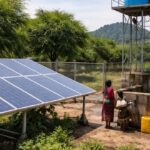
Several new rural water supply systems based on groundwater extraction have recently been developed to improve access to safe drinking water. In some communities, new piped systems now provide reliable water services to thousands of residents who previously depended on contaminated springs or seasonal streams.
Expanding groundwater infrastructure is considered one of the most practical solutions for improving water access in Ethiopia. However, sustainable management remains essential. Over-extraction, contamination risks, and climate variability require careful hydrological assessment and long-term monitoring.
Engineering expertise, hydrogeological mapping, and community-centered planning will continue to play a critical role in ensuring that groundwater resources remain reliable and sustainable for future generations.