












Project Detail
Adigudem Surface Irrigation Project
Gumselasa Dam – Tigray Region, Northern Ethiopia
Project Overview
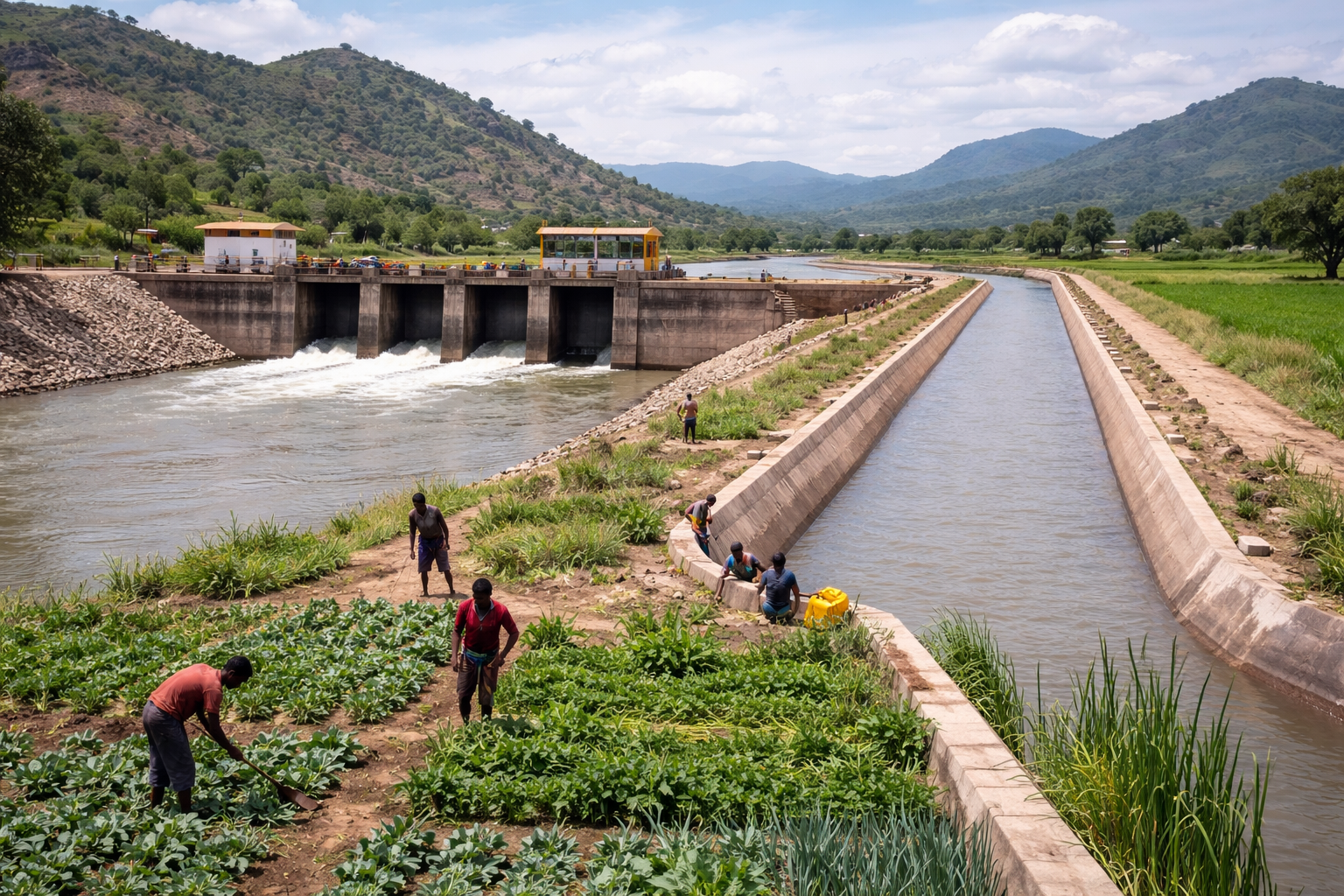
The Adigudem Surface Irrigation Project, located downstream of the Gumselasa Dam in the Tigray region of Northern Ethiopia, was implemented to enhance agricultural productivity and improve water management for rural farming communities.
The project was carried out between February 1996 and November 1996 under the Sustainable Agriculture and Environmental Rehabilitation in Tigray (SAERT) program. Its objective was to develop a comprehensive surface irrigation system capable of supplying water efficiently to agricultural land in the region.
Engineering Scope
The project involved the design and construction of a surface irrigation network serving approximately 136 hectares of farmland. The irrigation system included an integrated layout of:
- Primary canals
- Secondary canals
- Tertiary canals
These canals were designed to distribute water efficiently across the irrigated fields while maintaining stable flow conditions.
The project incorporated several hydraulic structures to control water flow and ensure structural stability, including:
- 400 concrete drop structures
- 3 culverts
- Division boxes (turnouts)
- 2 large drop structures with stilling basins
These structures were designed to regulate water distribution, dissipate flow energy, and prevent erosion within the canal system.
Construction and Implementation
Construction relied heavily on community-based labor, with more than 1,000 workers participating in the project. The workforce included engineers, foremen, tractor operators, and local laborers.
The estimated project cost exceeded 3.5 million Ethiopian Birr (approximately USD 500,000), with major expenditures allocated to construction supervision, engineering design, and labor operations.
Engineering Contribution
The project involved engineering activities related to:
- Irrigation canal layout and alignment
- Hydraulic structure placement
- Surveying and site engineering
- Monitoring construction and quality control
- Implementing design layouts in the field
Eng. Musse Abib and Eng. Mesfin Tewolde were involved in engineering activities associated with the Gumselasa Dam irrigation development works, contributing to irrigation infrastructure planning, site engineering, and implementation of the irrigation canal system.
Their work supported the development of a reliable irrigation network aimed at improving agricultural productivity and water management in the region.
Project Impact
The irrigation system enabled the cultivation of crops and vegetables throughout the year, strengthening food production and rural livelihoods in the region.
The project represents an example of sustainable irrigation infrastructure development, demonstrating how well-designed water management systems can support agricultural resilience in semi-arid environments.
Key Project Highlights
- Location: Adigudem, Tigray Region, Northern Ethiopia
- Irrigation Area: 136 hectares
- Canal System: Primary, secondary, and tertiary canals
- Hydraulic Structures: 400 drop structures, 3 culverts
- Energy Dissipation: Two large drop structures with stilling basins
- Construction Period: February – November 1996
- Implementation Program: SAERT
Supporting Documentation
For a more detailed technical description of the project, including design illustrations and construction details:
Download the project document:
Adigudem Surface Irrigation Project (PDF)